The VR School
Financial LiteracyGive
Enroll
BIO
All Courses
UC A-G Section DLab ScienceWASC AccreditedPre-AP Program

Pre-AP Biology
AP Science Readiness

Think Like a Scientist. Build the Foundation for AP.

The College Board's Pre-AP Biology course builds the scientific investigation skills, biological literacy, and evidence-based reasoning that power success in AP Biology, AP Chemistry, and AP Environmental Science — guided by Dr. Kwame Osei.

Start with Dr. Kwame
AP Resources
🔬
Pre-AP
Biology
Quick LinksCollege Board Pre-AP Biology VRS AP Resources AP Seminar Exemplar ↗
UC A-G · Section D · Lab Science
Course Structure · Four Core Strands

How This Course Is Built

Pre-AP Biology develops four interlocking skill strands throughout the year. Every unit reinforces all four — because real science uses all of them simultaneously.

🧪

Scientific Investigation Skills

Experimental Design · Data · Analysis
  • › Designing controlled experiments with clear variables
  • › Collecting, recording, and organizing quantitative data
  • › Statistical analysis and identifying sources of error

AP Readiness Tip: Great scientists don't just memorize facts — they ask 'How do we know?' Write out your hypothesis and variables before every lab. The habit of experimental thinking is the single biggest predictor of AP Biology success.

📖

Biological Literacy

Vocabulary · Concept Maps · Scientific Texts
  • › Building precise science vocabulary through spaced repetition
  • › Constructing concept maps to connect big ideas
  • › Reading and interpreting primary and secondary scientific texts

AP Readiness Tip: Biology vocabulary is your foundation. A student who knows 'phospholipid bilayer' can answer 5 AP Biology questions that a student who says 'cell wall' cannot. Learn every term in context — not just definitions.

🔭

Laboratory Techniques

Microscopy · Pipetting · Gel Electrophoresis · Dissection
  • › Compound and dissecting microscope use and cell identification
  • › Proper pipetting, measurement, and solution preparation
  • › Gel electrophoresis simulation and virtual dissection techniques

AP Readiness Tip: AP Biology has required lab components. Every technique you practice here — pipetting, microscopy, gel reading — appears directly on the AP exam as data interpretation questions. Lab fluency is exam fluency.

💬

Evidence-Based Argumentation

Claims · Evidence · Reasoning (CER Framework)
  • › Constructing scientific claims supported by specific data
  • › Selecting and citing relevant evidence from experiments
  • › Reasoning that links evidence to claims using biological principles

AP Readiness Tip: The CER framework is the language of AP Free Response. Make a CLAIM, cite EVIDENCE (data, not opinions), and write REASONING (the biological principle that connects them). Practice this structure in every written response.

AP Readiness

What This Course Unlocks

Pre-AP Biology is specifically designed by the College Board to build the thinking skills and content foundation that make AP science courses achievable. Every skill you develop here transfers directly.

🧬
AP Biology

Cell biology, genetics, evolution, and ecology — every Pre-AP unit maps directly to the AP Biology curriculum. Students who complete Pre-AP Biology report the AP course feeling like a 'second pass,' not a first.

⚗️
AP Chemistry

The chemistry of life — macromolecules, enzymes, ATP, and osmosis — introduces the molecular thinking AP Chemistry requires. Lab technique and data analysis skills transfer directly.

🌍
AP Environmental Science

Ecology, biogeochemical cycles, food webs, and human impact form Unit 4 of Pre-AP Biology. These are the exact core topics of APES — students enter with a major advantage.

🧠
AP Psychology

Scientific method, experimental design, and evidence-based reasoning are central to AP Psychology. Pre-AP Biology students already know how to design studies, analyze data, and avoid common reasoning errors.

AP Readiness Roadmap

Skills you'll build that pay off on every AP science exam

🧪

Experimental Design: You will design controlled experiments before AP Biology requires it — giving you 2 years of practice on AP's most complex skill.

✍️

CER Writing: The Claim-Evidence-Reasoning framework is the backbone of AP Biology, AP Chemistry, and APES free response questions.

📊

Data Analysis: Reading graphs, identifying trends, calculating percent change — you'll do this every unit so it becomes automatic.

📖

Biological Literacy: Vocabulary depth and concept mapping skills that allow you to read AP Biology passages without stopping to look things up.

AP Readiness Tips
📝

Review 5–10 vocab terms daily using flashcards. Biology is a vocabulary-dense discipline — students who know the words answer questions faster and with more precision.

✏️

Draw diagrams for every process you learn. Cell division, osmosis, the carbon cycle — drawing forces you to understand sequence and structure, not just recall facts.

🔗

Understand processes, not just facts. Don't memorize 'mitosis has 4 phases.' Understand WHY each phase must happen in order. The 'why' is what AP exams test.

💬

Practice the CER framework in every written response, even informal ones. Claim → Evidence → Reasoning. This structure should become automatic before AP Biology.

🌐

Connect units to each other constantly. Enzymes (Unit 1) drive cellular respiration. DNA (Unit 2) codes for proteins including enzymes. Evolution (Unit 3) selects for better enzymes. Ecology (Unit 4) depends on energy from metabolism. Biology is one interconnected story.

🥼

Take lab safety and technique seriously — not just for safety, but because correct technique produces reliable data. Bad technique = bad data = bad conclusions. Precision in the lab is precision in thinking.

College Board Pre-AP Aligned

Four Pre-AP Biology Units
🦠
UNIT 1

Unit 1: Cell Biology and Chemistry of Life

Expand ›

Key Topics

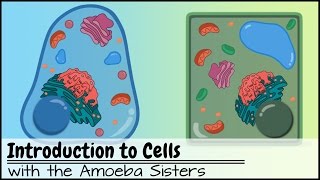
  • Cell structure: prokaryotic vs. eukaryotic cells and organelle functions
  • The phospholipid bilayer and membrane structure and function
  • Macromolecules: carbohydrates, lipids, proteins, and nucleic acids
  • Enzymes: structure, substrate specificity, and environmental factors
  • ATP and cellular energy: how cells capture and use energy
  • Osmosis and diffusion: movement of molecules across membranes

Key Terms

organelle
membrane-bound structure within a eukaryotic cell with a specialized function
phospholipid bilayer
double layer of phospholipids forming the cell membrane; hydrophilic heads out, hydrophobic tails in
enzyme
protein catalyst that speeds up chemical reactions by lowering activation energy
substrate
molecule that an enzyme acts upon; fits into the enzyme's active site
ATP
adenosine triphosphate — the primary energy currency of all living cells
osmosis
diffusion of water across a semipermeable membrane from high to low water concentration
Practice Prompt

CER Practice: A student places a potato slice in a 10% salt solution for 30 minutes. The potato loses mass. Write a complete CER response explaining why. Include: Claim (what happened), Evidence (data from the experiment), Reasoning (the biological principle — osmosis — that explains it). Then design a follow-up experiment to test whether salt concentration affects the rate of mass change.

Practice with Dr. Kwame →

Curated Video Lessons

Cell Structure and Function

Cell Structure and Function

Bozeman Science14 min
Biological Macromolecules

Biological Macromolecules

CrashCourse Biology12 min
Enzymes and Metabolism

Enzymes and Metabolism

Khan Academy11 min
🧬
UNIT 2

Unit 2: Genetics and Heredity

Expand ›

Key Topics

  • DNA structure: the double helix, base pairing, and replication
  • Mitosis: cell division for growth and repair — phases and outcomes
  • Meiosis: cell division for reproduction — how genetic variation arises
  • Mendelian genetics: dominant and recessive alleles, Punnett squares
  • Incomplete dominance, codominance, and sex-linked traits
  • Pedigree analysis: tracing inheritance patterns through family trees

Key Terms

allele
one of two or more versions of a gene at a specific locus on a chromosome
genotype
the actual genetic makeup of an organism (e.g., Aa, BB)
phenotype
the observable physical or behavioral traits expressed by an organism's genotype
meiosis
cell division that produces haploid gametes (sperm/egg) with half the chromosomes
recombination
exchange of genetic material between homologous chromosomes during meiosis (crossing over)
pedigree
diagram showing inheritance of a trait across multiple generations of a family
Practice Prompt

Lab Design Practice: A scientist wants to determine whether a new chemical mutagen causes increased mutation rates in bacteria. Design a controlled experiment. Identify: independent variable, dependent variable, control group, and at least 3 controlled variables. Predict results if the mutagen works. Then apply the CER framework to explain what data would support or refute the hypothesis.

Practice with Dr. Kwame →

Curated Video Lessons

DNA Structure and Replication

DNA Structure and Replication

Bozeman Science13 min
Mitosis vs. Meiosis

Mitosis vs. Meiosis

CrashCourse Biology11 min
Mendelian Genetics and Punnett Squares

Mendelian Genetics and Punnett Squares

Khan Academy10 min
🦎
UNIT 3

Unit 3: Evolution and Natural Selection

Expand ›

Key Topics

  • Darwin's theory: natural selection, variation, and differential reproduction
  • Evidence for evolution: fossil record, comparative anatomy, molecular biology
  • Population genetics: allele frequencies and factors that change them
  • Hardy-Weinberg equilibrium: when evolution is NOT occurring
  • Speciation: how new species form through reproductive isolation
  • Phylogenetics: reading evolutionary trees (cladograms)

Key Terms

natural selection
process by which heritable traits that increase survival/reproduction become more common
adaptation
heritable trait that increases an organism's fitness in its environment
phylogeny
evolutionary history and relationships among organisms shown as a branching tree
Hardy-Weinberg
principle stating allele frequencies stay constant in a population with no evolutionary forces
speciation
process by which one species splits into two or more species through reproductive isolation
fitness
an organism's relative ability to survive and reproduce in its environment
Practice Prompt

Data Analysis Practice: A population of beetles contains green (GG or Gg) and brown (gg) individuals. In a field with green grass, birds eat mostly brown beetles. Over 10 generations, the frequency of the 'g' allele drops from 0.5 to 0.2. (a) Write a CER response explaining this change using natural selection. (b) Under Hardy-Weinberg, what would the expected frequency of brown beetles be if allele frequency is 0.2? (c) What does the difference between expected and observed frequencies tell us?

Practice with Dr. Kwame →

Curated Video Lessons

Natural Selection — Bozeman Science

Natural Selection — Bozeman Science

Bozeman Science12 min
Evolution: Natural Selection

Evolution: Natural Selection

CrashCourse Biology11 min
Hardy-Weinberg Equilibrium

Hardy-Weinberg Equilibrium

Khan Academy9 min
🌿
UNIT 4

Unit 4: Ecology and Systems

Expand ›

Key Topics

  • Biomes and ecosystems: abiotic and biotic factors that define communities
  • Food webs and energy flow: trophic levels, producers, consumers, decomposers
  • Biogeochemical cycles: carbon, nitrogen, water, and phosphorus cycles
  • Population dynamics: carrying capacity, limiting factors, logistic growth
  • Species interactions: mutualism, commensalism, predation, competition, parasitism
  • Human impact: climate change, habitat destruction, biomagnification, conservation

Key Terms

biome
large-scale ecosystem defined by climate, vegetation, and characteristic organisms
trophic level
position in a food chain; energy transfers with ~10% efficiency between levels
biomagnification
increase in concentration of toxins at higher trophic levels in a food chain
carrying capacity
maximum population size an environment can sustainably support (K)
mutualism
symbiotic relationship where both species benefit (+/+)
keystone species
species with a disproportionately large effect on ecosystem structure relative to its abundance
Practice Prompt

Systems Thinking Practice: A lake ecosystem has algae → small fish → large fish → osprey. A factory begins releasing mercury into the lake. (a) Explain biomagnification using trophic levels — which organism has the highest mercury concentration and why? (b) Design an investigation to measure mercury levels across trophic levels. Identify variables. (c) Write a CER response arguing whether the factory should be shut down, using ecological data as evidence.

Practice with Dr. Kwame →

Curated Video Lessons

Ecological Relationships

Ecological Relationships

Bozeman Science14 min
Ecology — Rules for Living on Earth

Ecology — Rules for Living on Earth

CrashCourse Biology12 min
Biogeochemical Cycles

Biogeochemical Cycles

Khan Academy10 min
AP Science Preparation

Assessment Types

Every assessment in Pre-AP Biology is designed to develop skills that transfer directly to AP exams — not just measure content recall.

Assessment Coach →
🔬

Lab Report

Scientific writing with hypothesis, methods, data, analysis, and conclusion. Lab reports teach students to communicate science the way real scientists do — clearly, precisely, and with evidence.

Scoring Criteria
Hypothesis: testable, falsifiable prediction with reasoning
Methods: reproducible procedure with identified variables
Data: organized tables, graphs with labeled axes and units
Analysis: patterns identified and explained with biology concepts
Conclusion: claims tied to data, error analysis, future directions
AP Connection

AP Biology FRQ section rewards students who write exactly like this. Lab report practice IS AP exam practice.

✍️

CER Response (Claim-Evidence-Reasoning)

Evidence-based scientific argument using the Claim-Evidence-Reasoning framework. The most transferable writing skill in all of AP science.

Scoring Criteria
Claim: specific, answerable assertion about a biological phenomenon
Evidence: data from the experiment or provided sources (not opinions)
Reasoning: the biological principle that connects evidence to claim
Completeness: all three parts present and clearly distinguishable
Precision: uses correct vocabulary and avoids vague language
AP Connection

AP Biology, AP Chemistry, AP Environmental Science all use CER-style FRQs. Master the framework here and it transfers to every AP science exam.

🧠

Concept Application Question

Applying biological principles to novel scenarios not seen in class. Tests deep understanding versus surface memorization — exactly what AP exams measure.

Scoring Criteria
Identifies the relevant biological concept or principle
Correctly applies the concept to the new scenario
Explains the causal mechanism (not just what, but why)
Connects to other units or broader biological themes
Uses precise vocabulary — no paraphrasing of terms
AP Connection

AP Biology is famous for testing applications of concepts in novel contexts. Pre-AP Concept Application Questions are the exact same cognitive demand.

Curated for Pre-AP Learners

Practice Resources

🎯
FREE PRACTICEFREE

Khan Academy Biology

Comprehensive biology content with videos, articles, and practice questions aligned to every unit. Excellent for concept review and vocabulary building.

Open resource
🎥
HIGHLY RECOMMENDEDFREE

Bozeman Science (YouTube)

Paul Andersen's AP Biology video series — clear, concise, and lab-oriented. Perfect for Pre-AP students preparing for the full AP course.

Open resource
📺
CONTENT REVIEWFREE

CrashCourse Biology

Hank Green's engaging biology series. Fast-paced and visually rich — great for initial exposure to concepts before deep study.

Open resource
🧪
LAB RESOURCESFREE

Biology Corner

Lab activities, worksheets, and practice exercises specifically designed for pre-AP and AP Biology. Excellent for lab report practice.

Open resource
🏛
SIMULATIONSFREE

HHMI BioInteractive

Free, peer-reviewed animations and lab simulations from the Howard Hughes Medical Institute. Used in real college biology courses.

Open resource
🫀
VISUALIZATION

Visible Body (Anatomy)

3D interactive models of human anatomy and cell biology. Excellent for understanding structures that are hard to visualize in 2D diagrams.

Open resource
📚
VOCABULARYFREE

Quizlet Biology

Pre-made and student-created flashcard sets for every biology unit. Use spaced repetition mode for maximum retention of vocabulary.

Open resource
Year-Long Progression

32-Week Study Plan

Weeks 1–8

Phase 1: Cell Biology and Chemistry of Life

  • Daily vocab review: 5 terms per day from Unit 1 word list
  • Complete all Unit 1 lab activities: microscopy, osmosis experiment, enzyme lab
  • Write 2 full CER responses on cell biology topics
  • Draw and label cell diagrams from memory by Week 4
Weeks 9–16

Phase 2: Genetics and Heredity

  • Master Punnett squares: monohybrid, dihybrid, sex-linked crosses
  • Practice pedigree analysis with at least 5 family trees
  • Write a complete Lab Report for the DNA extraction lab
  • Connect DNA → protein → phenotype chain before Week 16
Weeks 17–24

Phase 3: Evolution and Natural Selection

  • Apply Hardy-Weinberg to at least 3 practice problems
  • Read and interpret 2 phylogenetic trees per week
  • Write a CER response using evolutionary evidence (fossils, DNA, anatomy)
  • Connect evolution to Unit 2 (mutation as source of variation)
Weeks 25–32

Phase 4: Ecology and Environmental Systems

  • Build a complete food web with 3 trophic levels for a chosen biome
  • Calculate energy transfer efficiency between trophic levels
  • Complete a biogeochemical cycles concept map connecting all 4 cycles
  • Final synthesis: write a CER response connecting all 4 units (how ecology depends on evolution, genetics, and cell biology)
Official & Curated

AP Resources Hub

🏛
Official Source

College Board Pre-AP Biology

Official course framework, instructional materials, and assessment guidance from the College Board Pre-AP program.

Visit AP Central →
📚
The VR School

VRS AP Resources Center

All VR School AP course resources, study guides, and academic support for Pre-AP and AP students.

Open AP Resources →
⭐
Student Exemplar

AP Seminar Exemplar by Jiang

See the academic standard every VRS student aspires to — built on exactly the skills Pre-AP Biology develops.

View Exemplar →
AI Science Tutoring

Your Pre-AP Biology AI Tutor

Dr. Kwame Osei is your Pre-AP Biology expert — CER coaching, lab report help, experimental design practice, and AP readiness guidance. SofAI connects biology to every other AP subject.

🧪 Help me write a CER response about osmosis in my potato lab🧬 Explain the difference between mitosis and meiosis — I keep confusing them🔬 Design an experiment to test how temperature affects enzyme activity🦎 How does natural selection connect to what I'll see in AP Biology?
🌟 Your AP Pathway

Pre-AP Biology Is Your Launchpad for AP Science Success

Every skill you build in Pre-AP Biology — experimental design, CER writing, data analysis, biological literacy — is exactly what AP Biology, AP Chemistry, and AP Environmental Science reward. Start here. Arrive at AP ready.

View AP Seminar ExemplarExplore AP Biology →
🎓
🔬

Ready to Build Your AP Science Foundation?

Enroll in Pre-AP Biology — the College Board's official AP readiness course for life science. WASC accredited. UC A-G Section D approved. Build the skills that make AP Biology, AP Chemistry, and AP Environmental Science achievable.

Browse All Courses

WASC Accredited · UC A-G Section D · College Board Pre-AP Program · Lab Science

Financial literacy should belong to everyone

Help California students build money confidence.

Give to the endowment →Open financial literacy hub
VR
The VR School

The world's first accredited Spatial Intelligence school. WASC-accredited. UC A-G approved. 402+ students. 20+ countries.

520 Lasuen Mall #200, Stanford, California, CA 94309
(650) 422 9180
admissions@thevrschool.org
WASC Accredited

Fully Accredited for Grades 6–12 by ACS WASC

Code: 43 46070 999Grades 6–12

World Labs Partner ✦

Spatial Intelligence · Marble · Spark.js

School

  • About Us
  • Staff
  • Accreditation
  • School Profile
  • Endowment
  • Corporate Giving
  • Careers

Programs

  • UC A-G Courses
  • California Personal Finance
  • CVC Dual Enrollment
  • CVC Pathway OS
  • iBuildme
  • iBuildme App
  • iTeachXR LMS
  • AP Seminar Studio
  • Credentials
  • AI Program
  • VR Labs
  • VR Experiences
  • VR Network

Spatial Intelligence

  • Spatial Lab ✦
  • Moonshots TV
  • World Labs Marble ↗
  • The School That Shouldn't Exist
  • Website Evolution Archive
  • Media & Stories
  • VR Explorer

Support

  • Help & Support
  • Contact
  • Blog
  • Headset Safety
  • Privacy Policy
  • Terms of Service

© 2026 The VR School · All rights reserved · Spatial Intelligence Lab ✦

402+ students · Stanford · Palo Alto · China · Singapore

91% Math · 89% Science · 86% ELA · WASC · UC A-G